
The last two years have seen repeated, prolonged delays in the renovation work, in part due to illness, and the point was reached when it became necessary to research and engage new teams of tradesmen. Finally, renovation work is well along and the time has come to resume the story.
Something else happened during the last two years. A growing desire to better understand architectural and interior design led me to a lot of reading – online and with ‘real’ books – but I wanted more. Internet research revealed excellent online courses in the fields of art and design history. I found a series of courses provided by The Victoria and Albert Museum Academy. I would prefer to be in a classroom or lecture theatre of that outstanding institution but my move away from London had made that impractical. Their online programmes make learning possible for people in any location. Students from all over the globe can enrol. Furthermore, although there is a benefit in listening to online lectures “live”, these talks are recorded and available to view at any convenient time and for as many times as the student wishes over an extended period.
I have thoroughly enjoyed the learning process and continue to do so. The result has been a changed outlook when it comes to designing and furnishing my own home. I feel even less constrained by the idea of remodelling my home to tightly fit a particular time period. I’ve become more attuned to the fact that there is a tremendous cross-over in design styles and ideas and that they are inspired by a multitude of sources.
I started to look more closely at products in retail stores. Not only seeing the items but thinking about what may have inspired their design. Was the product a brand new concept or had preceding design movements been an influencial factor?
As an example, while walking through a furniture display in a local department store (John Lewis), I noticed an armchair that seemed to be a wholly contemporary design at first glance. However, something felt familiar about its shape and its angles. I vaguely remembered an image I’d seen during my course on the Bauhaus – the school of design, architecture and applied arts that was active in Germany from 1919 to 1933. As soon as I got home, I pulled out my Bauhaus file with all its notes and printouts and there it was. Not the plush, upholstered piece I’d seen in John Lewis but a metal skeleton of a chair – the Model B3 chair – (or Wassily chair, as it came to be known) designed by Marcel Breuer in the mid 1920s.
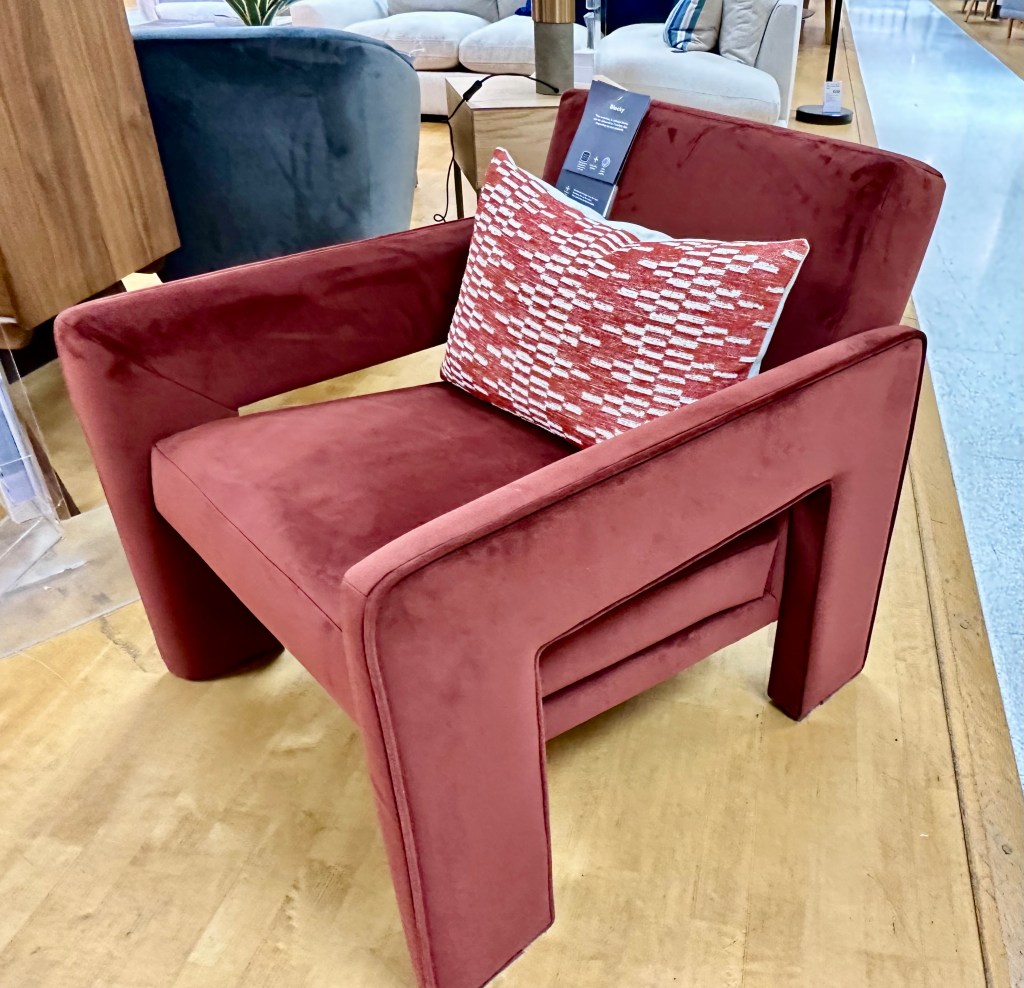
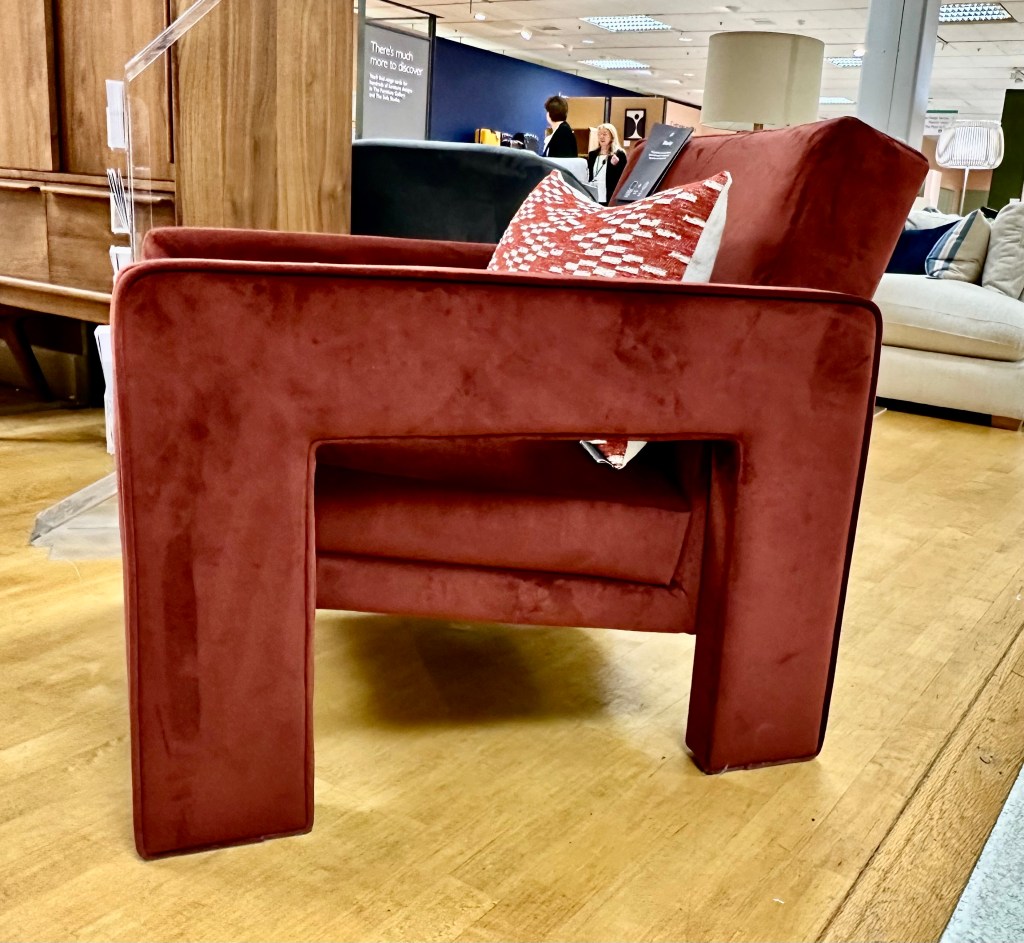
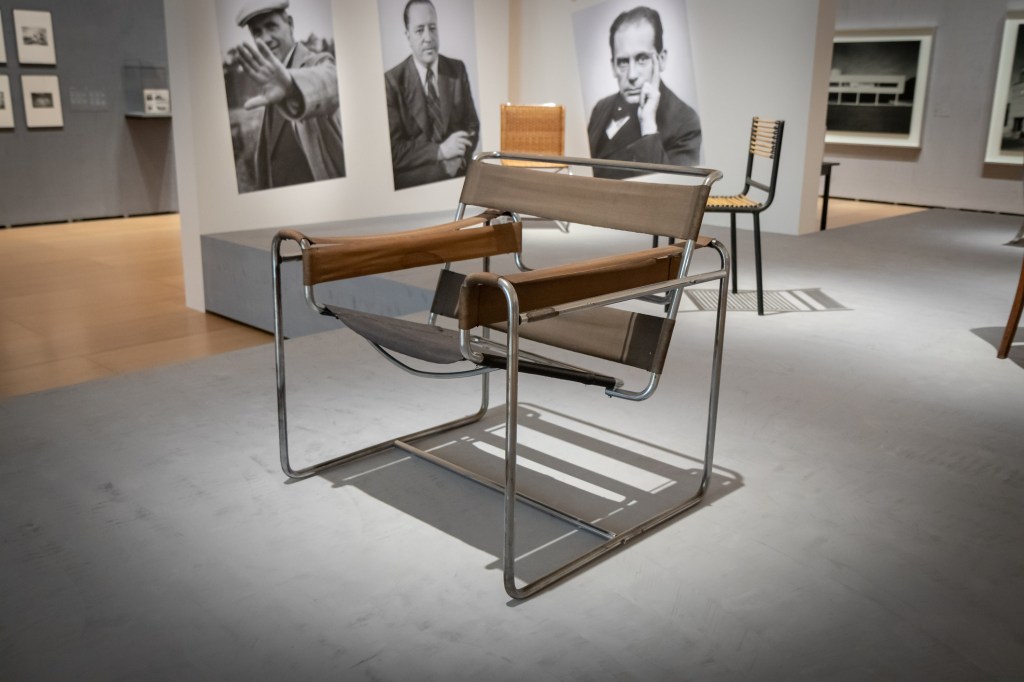
I wondered whether the design of John Lewis’s “Blocky” model had been influenced by the Wassily Chair? Interestingly, the designer’s notes on johnlewis.com state that the armchair was inspired by “voluminous 1970s sculptural forms“. So it seems I have not correctly interpreted this designer’s thinking. Then again, might some items of 1970s furniture have had influences harking back to preceding decades?
The point is this; my understanding of design and ‘cross-pollination’ of influences was opening up. As a result, the process of decorating and furnishing my home was getting even more interesting!
A.P. 18 July 2024
Suggested online Links:
Online learning at V&A Academy: https://www.vam.ac.uk/info/learn
John Lewis Blocky armchair: https://www.johnlewis.com/john-lewis-blocky-armchair/p6416302
Photo Credits:
The Wassily Chair : ID 259434313 © Roman Belogorodov⎜Dreamstime.com




 Back to the Thirties