Colour My World

Featured

There was a final task to complete before my John Lewis Home Design Stylist could formulate a plan: to choose colours for my home.

Colour schemes for my previous homes over the years had usually reflected the era of their construction and their location. Neutral shades brightened with colourful accessories were applied to my 21st-century new-build apartment. Stark white walls adorned with a multitude of paintings featured in my 1920s apartment when living in Scandinavia. Had the renovation of my South London Victorian cottage ever been completed, it would have been decorated with a flourish of rich reds, greens and blues. The question of how to apply colour to a traditional English thirties house in an authentic way was a new field of research for me.

I typed “nineteen-thirties colour palettes” into several internet search engines and got a range of results. Despite the variation amongst the responses, I found after sifting through them that they largely agreed on the inclusion of dusky pastel shades and neutral tones. There was also a recurring emphasis on greens and blue-greens, muted pinks and mauves, yellows, orange and reds. I found that range interesting and yet conflicting. I wondered how it had come about.

During that decade, as I’d been learning, there was more than one style co-existing. In Britain, the desire for a healthy manner of living featuring the outdoors and nature led to an emphatic use of green. At the same time, the style which came to be later known as ‘Art Deco’ was still flourishing. Its diverse mix of influences including the Ballets Russes, archaeological discoveries of Egyptian treasures and interest in Japanese art and design – Japonism – led to vibrant reds, yellows, greens and blues and black coming to the fore.

In reality, I had a wide range of colours to work with. To narrow down what might suit my own house, I started to ponder memories of the colours in that childhood home.

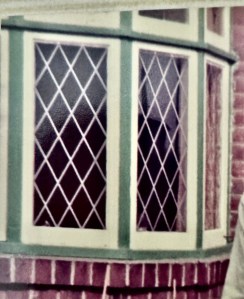
I remembered green featuring throughout the house and especially so with the exterior woodwork. I had watched my father blow-torch and scrape away layers of paint from wooden window frames to reveal several shades of green. Then I saw the woodwork being re-painted partly in white and partly with a green of his personal choice.

My mother’s response to all of this was to mutter the phrase – or sometimes to sing it – “forty shades of green”. (That owed more to the Irish singer Val Doonican than it did to Johnny Cash!)

So green was the first colour to go on my list. I’d been encouraged by my Home Stylist to find images – whether from retail websites or from artworks – to illustrate colours which appealed to me. One day, just as I was taking a short-cut through the furniture department in Harrods in London (yes, really, but it’s too long a story to explain!) my eyes fell upon a beautiful marble-topped dining table. It was surrounded by chairs upholstered in the richest dark green velvet. I knew instantly that this would become my theme. The furniture was made from cherry wood stained a rich, red-brown colour. It seemed to perfectly capture the richness and warmth I wanted my home to possess.

The furniture I was looking at had been designed and produced by the French company Roche Bobois. The design range on display was named Eden Rock. I was given a brochure by a member of the sales team and that booklet became the mainstay of my home design inspiration.

Roche Bobois’ furniture range “Eden Rock” as depicted in their “Creations” Autumn -Winter 2019 brochure

I had started the process of better understanding the factors influencing colour palettes of the nineteen thirties. As a result, I felt better prepared to choose colours for my own home.

I still had more specific ideas and requirements for certain rooms, but at least I had a starting point. The image in that little brochure would serve as the foundation for planning my main living areas.

The design process was really getting underway!

A.P. 9 September 2024


Photo Ownership:

Window: Privately owned photograph.

I

More than Meets the Eye

Featured

The last two years have seen repeated, prolonged delays in the renovation work, in part due to illness, and the point was reached when it became necessary to research and engage new teams of tradesmen. Finally, renovation work is well along and the time has come to resume the story.

Something else happened during the last two years. A growing desire to better understand architectural and interior design led me to a lot of reading – online and with ‘real’ books – but I wanted more. Internet research revealed excellent online courses in the fields of art and design history. I found a series of courses provided by The Victoria and Albert Museum Academy. I would prefer to be in a classroom or lecture theatre of that outstanding institution but my move away from London had made that impractical. Their online programmes make learning possible for people in any location. Students from all over the globe can enrol. Furthermore, although there is a benefit in listening to online lectures “live”, these talks are recorded and available to view at any convenient time and for as many times as the student wishes over an extended period.

I have thoroughly enjoyed the learning process and continue to do so. The result has been a changed outlook when it comes to designing and furnishing my own home. I feel even less constrained by the idea of remodelling my home to tightly fit a particular time period. I’ve become more attuned to the fact that there is a tremendous cross-over in design styles and ideas and that they are inspired by a multitude of sources.

I started to look more closely at products in retail stores. Not only seeing the items but thinking about what may have inspired their design. Was the product a brand new concept or had preceding design movements been an influencial factor?

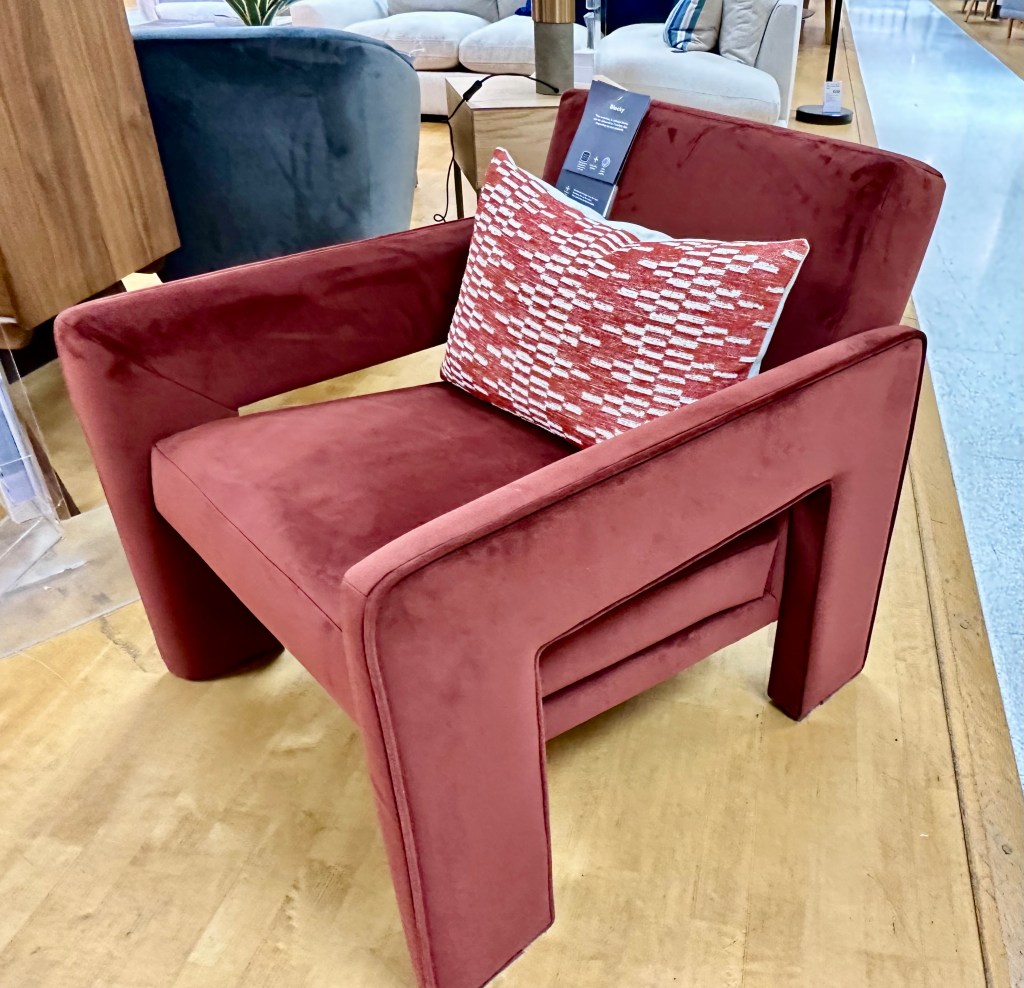
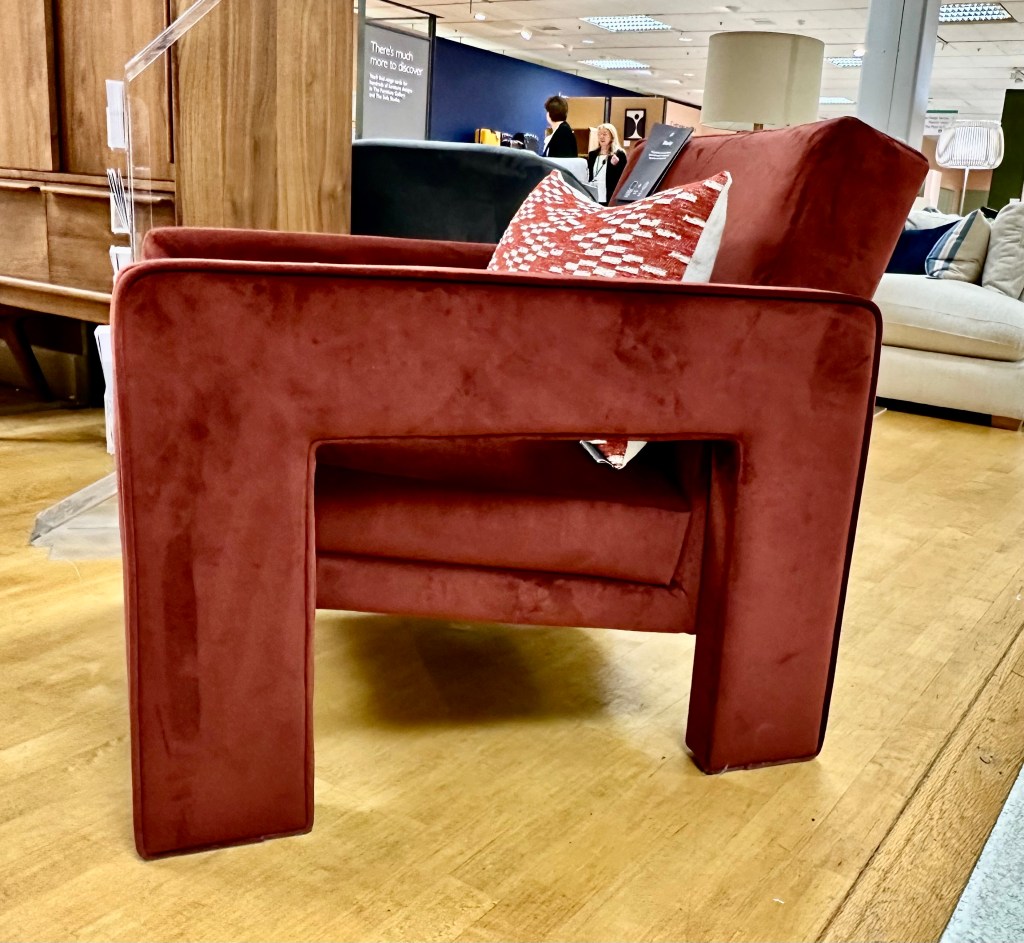
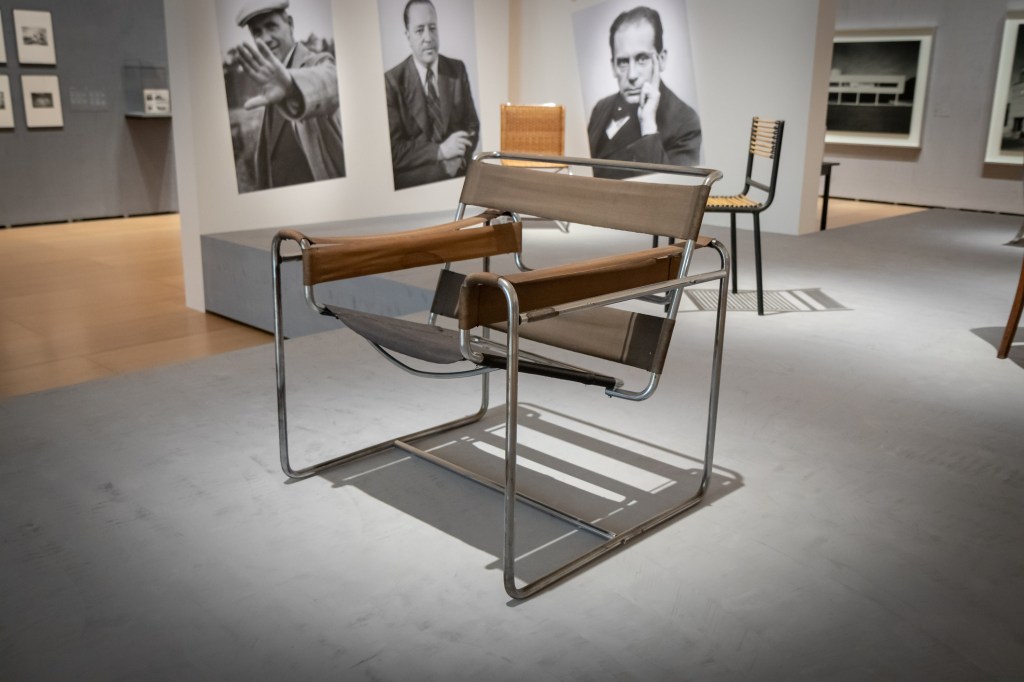
As an example, while walking through a furniture display in a local department store (John Lewis), I noticed an armchair that seemed to be a wholly contemporary design at first glance. However, something felt familiar about its shape and its angles. I vaguely remembered an image I’d seen during my course on the Bauhaus – the school of design, architecture and applied arts that was active in Germany from 1919 to 1933. As soon as I got home, I pulled out my Bauhaus file with all its notes and printouts and there it was. Not the plush, upholstered piece I’d seen in John Lewis but a metal skeleton of a chair – the Model B3 chair – (or Wassily chair, as it came to be known) designed by Marcel Breuer in the mid 1920s.

I wondered whether the design of John Lewis’s “Blocky” model had been influenced by the Wassily Chair? Interestingly, the designer’s notes on johnlewis.com state that the armchair was inspired by “voluminous 1970s sculptural forms“. So it seems I have not correctly interpreted this designer’s thinking. Then again, might some items of 1970s furniture have had influences harking back to preceding decades?

The point is this; my understanding of design and ‘cross-pollination’ of influences was opening up. As a result, the process of decorating and furnishing my home was getting even more interesting!

A.P. 18 July 2024


Suggested online Links:

Online learning at V&A Academy: https://www.vam.ac.uk/info/learn

John Lewis Blocky armchair: https://www.johnlewis.com/john-lewis-blocky-armchair/p6416302

Photo Credits:

The Wassily Chair : ID 259434313 © Roman Belogorodov⎜Dreamstime.com

Time to Choose

Featured

The day of my appointment was looming.  I had made a booking with a Home Stylist from John Lewis’ Home Design Service and I had work to do.  I was going to have to convey to my stylist what I saw in my imagination and the look I was aiming to achieve.   

I wasn’t knowledgeable on the subject of interior design nor familiar with the specific vocabulary needed to articulate how I wanted my home to look.  While these deficiencies did not pose an obstacle to using the design service – I was simply invited to send any photographs or images to provide clues about my preferences – I did notice that a desire to learn more about the subject was being awakened.  I wanted to know more about the history and development of design movements. 

The internet can be a wonderful resource for research and I began reading a series of online articles – and blogs, of course!  I searched for books on these themes and found some very helpful, inexpensive books and set about ordering them.  I realised that my understanding of “Art Deco”, “English Country House Style” and the “Arts and Crafts” movement was a little foggy to say the least.  

To illustrate, when I had first started to think about the style I would choose for my home I thought the obvious choice would be Art Deco.  I’d grown increasingly drawn to elements of this design style over recent years and, given that this movement was at its peak in the nineteen twenties and thirties, it would be perfectly in keeping with the style of my property wouldn’t it?  Well, no, not necessarily.

Although my house had been built in the middle nineteen thirties, very few of its features could be associated with Art Deco style.  Rather, the property possessed the features of a very specific type of house built in England in the 1930s – the suburban semi-detached.  The mock-Tudor elements, the red brick construction, the harking back to design styles from previous eras were, if anything, more in tune with the Arts and Crafts movement of the late nineteenth century.   I learnt an important fact – that more than one style of art, design and architecture can exist in one time period.   

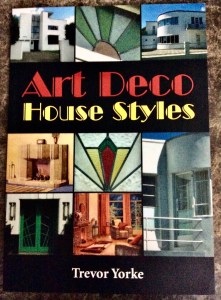
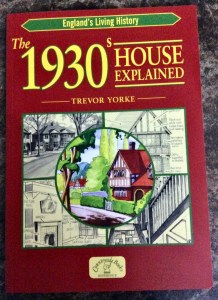
Two books in particular were very helpful in identifying the differences between what is now termed “Art Deco” architecture and the typical English suburban housing style of the nineteens thirties.  Both written by Trevor Yorke, the books “The 1930s House Explained” and “Art Deco House Styles” may be small in size but they are packed with information and illustrations identifying the characteristics of these two design styles.

In forthcoming posts, I’ll review the books and highlight points which have proved, in my own case, to be helpful.

( For further information about these books, visit: http://www.countrysidebooks.co.uk )

By Design

It was becoming clear that I’d need assistance to achieve my goal of blending several design themes and influences.  

On the other hand the thought that “it’s my home, I can decorate it how I like” kept surfacing.   Besides, how much would an interior design consultation cost?  Surely I’d do better to use those funds for items of furnishing?  Furthermore, for such a modest property – and an owner whose desire was to live quietly – might it be perceived as a little pretentious to commission the services of a professional designer?

Then I thought back to my Victorian house renovation experience – the one which didn’t go so well – and I remembered that it had been a lack of consultation which had led to so many costly mistakes.   I realised I was mentally writing off an interior design appointment on the grounds of price when I didn’t really know what the price would be.   Even though I had no idea where to start in identifying a suitable Interior Design Consultancy, I resolved to begin doing research.

Image of John Lewis department store in Newcastle upon Tyne, UK.  Image shows galleried restaurant area overlooking the concourse in Eldon Square shopping centre.
John Lewis, Newcastle upon Tyne

A day or so later, I needed to refer to some information I’d scribbled in a notebook and I rummaged in a bag to find the book.  A leaflet fluttered out of the bag onto the floor.  The leaflet had been handed to me by a counter assistant on my most recent visit to John Lewis (a UK national department store) and it contained information about their Home Design Service.  

All sorts of questions – mainly negative ones – entered my mind.  Would the Home Design Service just be an exercise in “up-selling”?  Might I be subjected to persuasion to go with current trends rather than my own, somewhat idiosyncratic styling ideas?  Would any Home Design Stylist afford the time ( and have the patience ) to listen to my mish-mash of ideas and then have the experience to pull them together into a harmonious scheme? 

Just what would an Interior Design professional think when approached by a client who wanted to draw on inspiration from Art Deco, the Arts and Crafts Movement, English Country House Styling, Charles Rennie Mackintosh and shoe-horn the whole disparate bunch into one house whilst attempting to respect its 1930s heritage?

Despite my many concerns, I concluded that it wouldn’t hurt to enquire further about the service.

Would it be possible to blend such an array of styles?


Photo Credits:

Charles Rennie Mackintosh mural, Glasgow: ID 155928611 © Ross Boag | Dreamstime.com

Chrysler Building, New York: ID 10658037 © Mikhail Kusayev | Dreamstime.com

Row of English 1930s houses: ID 55049188 © Andrew Hamilton | Dreamstime.com

Claridge’s Hotel, London: ID 220739361 © Amanda Lewis | Dreamstime.com

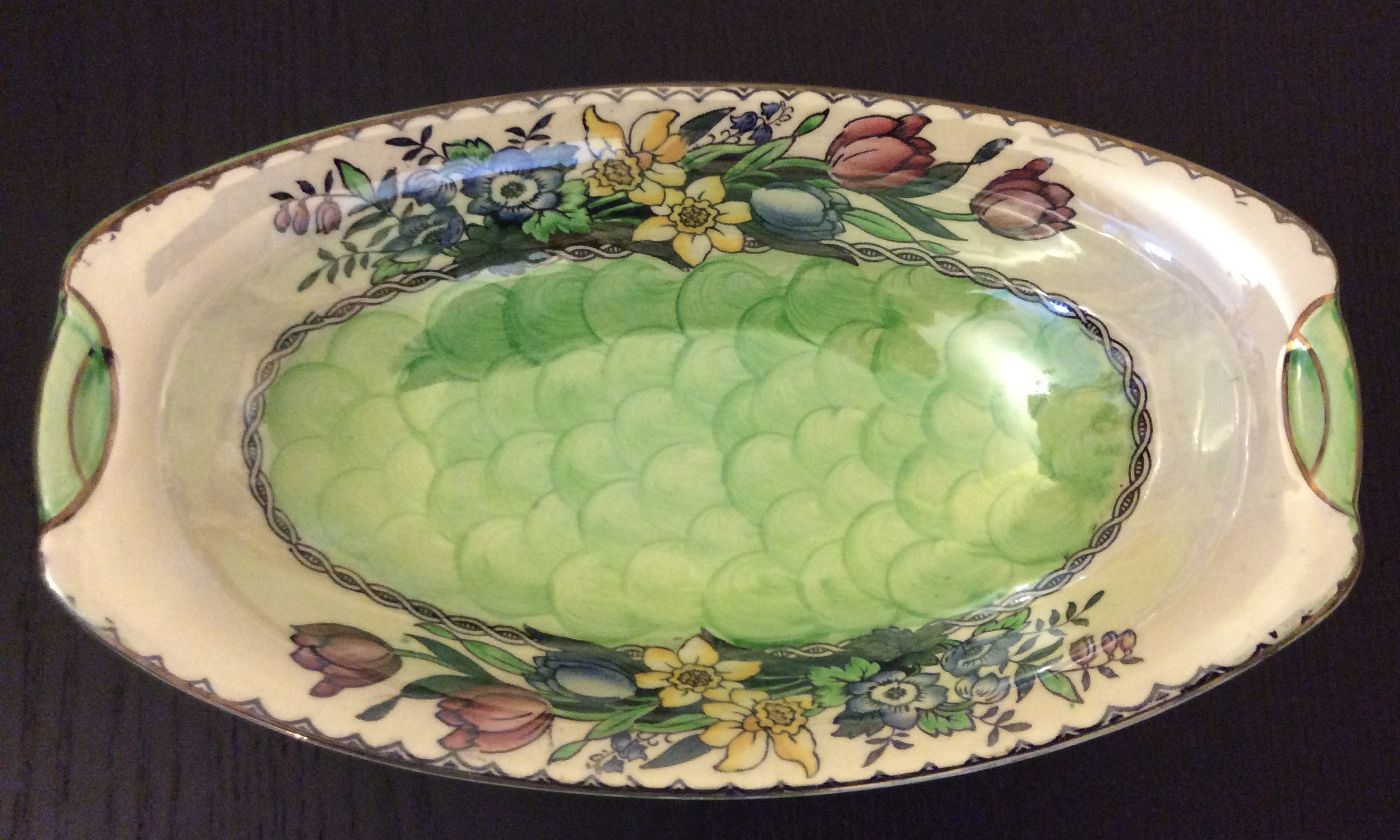
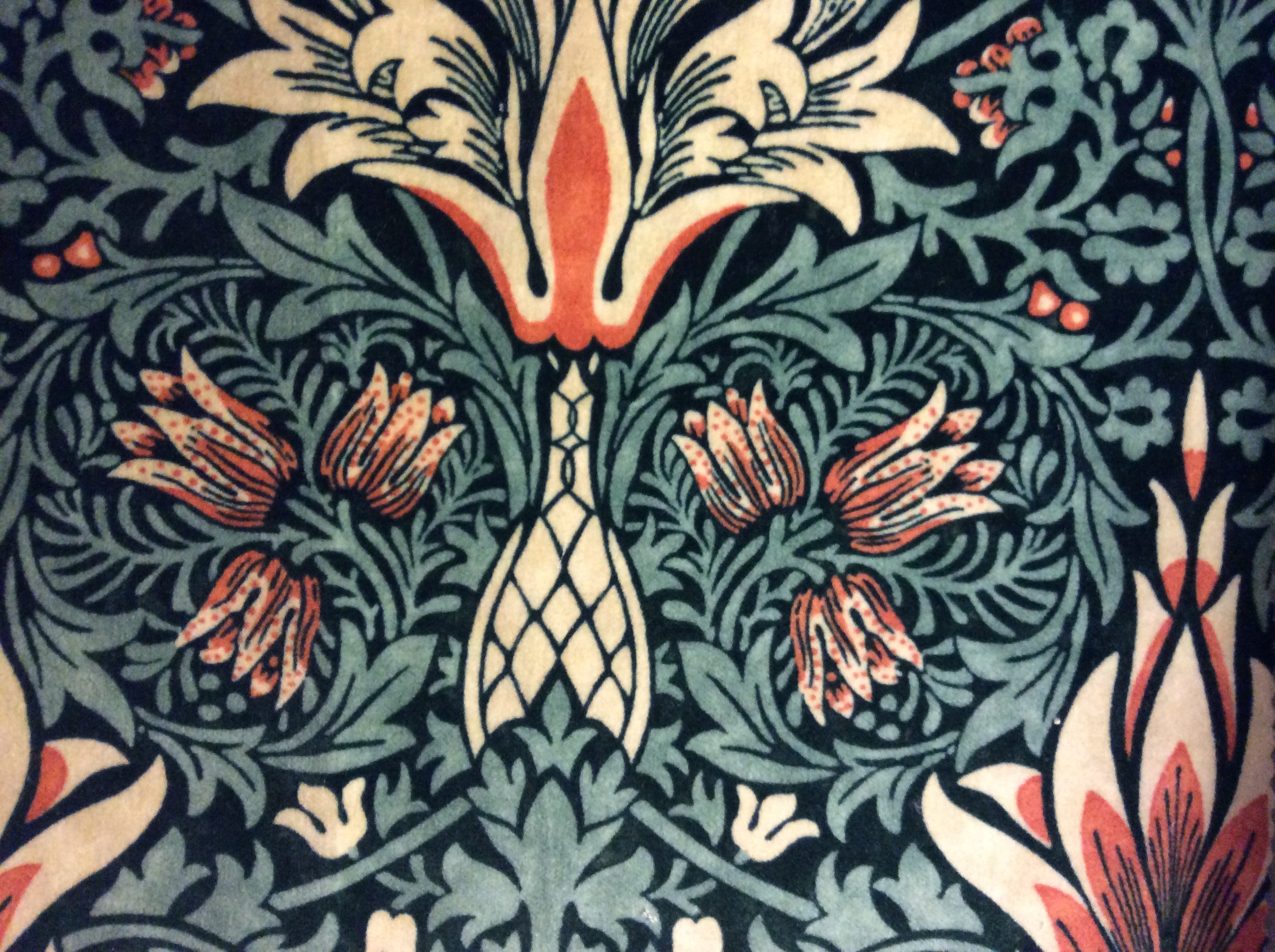
William MorrisFabric, Maling Dish: A.P.

Where Do I Begin?

The house and garden I was about to renovate may have been very modestly sized but my list of tasks wasn’t. There was a roof and guttering to repair, windows to replace, an electrical system and a heating system to upgrade, a kitchen and bathroom to replace and then the whole property to decorate and furnish.

For someone who has never worked in construction or in any trade to do with home maintenance, my dilemma revolved around the order in which this list of works should be tackled. To someone more experienced – or trained – than I was, the answer would have been glaringly obvious. The answer was not obvious to me, however, and it proved to be a source of anxiety.

I began writing – and re-writing – lists of what I thought the order of works should be but then something stirred in my memory from the episode of my disastrous Victorian house ‘renovation’. I’d made the mistake of running ahead and getting work done only to find weeks down the line that some completed works needed to be dismantled to allow other tasks to be carried out. Of course, asking for advice is a sensible thing to do, but the additional trap I’d fallen into with my Victorian house saga was to accept the advice of the first person I asked without seeking second (or third!) opinions.

The issues of costs and funding were adding pressure to my decision-making process. To delay commencing renovation works would be an expensive exercise. An empty house incurs regular and unavoidable bills. It seemed clear that the earlier I could move into the house and relinquish my existing home, the cheaper the exercise would be.

An image of someone using a calculator and pen and paper to make notes.

However, I remembered just how costly it can be to take the wrong course of action. I sat down and recalculated my budget sheet and factored in a way of taking a little more time. Paying out more for running costs in the short term would protect me from making rushed decisions and reduce the likelihood of making mistakes which could cost me dearly in the longer term.

I took a new sheet of paper and instead of writing a list of the order of works, I carried out research and wrote a list of local tradespeople to consult. I would need a professional and experienced person to advise me about the order in which the renovation should progress. I would listen to the ideas of several people and then consider their suggestions before making any firm decisions.

A Proverb recorded many centuries ago advises: “By consultation, plans will succeed” Those words are as true today as they were when they were first written down. I realised that a calmly paced, thorough consultation process with several contractors and tradespeople had to take place before any firm decisions could be made.

A.P. 1 March 2021

Photo Credit: ID  102350644 © Arturs BudkevicsDreamstime.com

Back To The Thirties!

That apartment served my family well for many years. I’d yearned to buy and live in a “new build” for such a long time and the experience, when it came, lived up to my expectations.

Suddenly, completely out of the blue, an opportunity arose: the opportunity to go back to living in a nineteen thirties period property, and not just any property but the one where I had grown up. The decision was not a easy one but finally it was made and I had an exciting project ahead of me – a thirties house to renovate, decorate and inhabit!

And so the story of the renovation begins ………….

Brand New Dawn

With the view of the Victorian house disappearing into the distance, I headed towards my new home – the ‘new-build’ I’d always dreamed of.

Instead of an estate agent’s, I’d walked into a sales office. Instead of viewing someone’s house, I’d taken a tour of a show home. The day I collected the keys from the site office and walked into that brand new apartment I had a whole new experience. It struck me how much I enjoyed the knowledge that no one else had ever lived there and that the only memories which would be made there would be my family’s. This was a blank canvas for me and my family to design, to decorate and inhabit. It may turn out to be the only ‘new-build’ I will ever buy in my lifetime but I’m glad to have had that experience.

As I walked the rooms, I started thinking about the style or mood of decor I’d opt for. Being a newly built property, it would have to be all sleek and modern, of course. Wouldn’t it?

I have absolutely no idea why it happened, but a very strange feeling come over me as I explored the flat and thought about potential decor styles. “This would look great with design elements from the Thirties, I muttered to myself”.

Photo Credits:

File ID 86441364 | © 1000words | Dreamstime.com

Back To The Future

My childhood wish to live in a modern house didn’t leave me. In fact, as I moved into my teen years, the desire grew even stronger – fuelled, perhaps, by my mother’s love of viewing “show houses”. Sleek designs, open-plan living, bright colour schemes – they served only to reinforce my conviction that a modern home would be the one for me. In fact, not only did I want a modern house, I wanted a newly built house!

Ripley Village near Harrogate, North Yorkshire, England

During that same time period, though, my parents took me along to see Stately Homes, museums, art galleries and villages which had been built in very particular architectural styles. To give an example; Ripley – a village near Harrogate in Yorkshire, which was modelled on a French village and is quite unlike anything you would expect to see in that county. The village was one of my father’s favourites, and we would visit often. I began to realise that there were facets of historical design which interested me too. My mind was beginning to broaden when it came to the subject of architecture!

When the time arrived for me to buy my first property there were several pressing practical considerations which over-ruled my desire to acquire a “new-build”. Locality and cost being the two major factors. And so my first ever property acquisition was not new, not even modern but Victorian. I never did find out the exact year in which my house was built. However, datestones on terraced blocks to the right and to the left of my own house stated 1868 and 1888 respectively. So we may conclude that my property was constructed somewhere in the middle of Queen Victoria’s reign.

I would love to be able to relate how I lovingly restored that Victorian workers’ cottage and how I painstakingly renovated original features. I wish I could say my home was worthy of an article in “Period Homes” magazine. That I can claim none of those achievements is a source of ongoing regret.

There were few successful moments in that renovation project which I can look back on with satisfaction. Instead, there were a string of poor decisions and errors. When the house was sold and I turned the key for the last time and drove away, I tried not to look in the rear-view mirror – neither literally nor metaphorically.

I was not aware of it at the time, but those lessons learned were going to stand me in good stead for any renovation and decoration projects I would take on in the future. At that moment, however, all I wanted from my next home was that it would be brand, shiny-new!

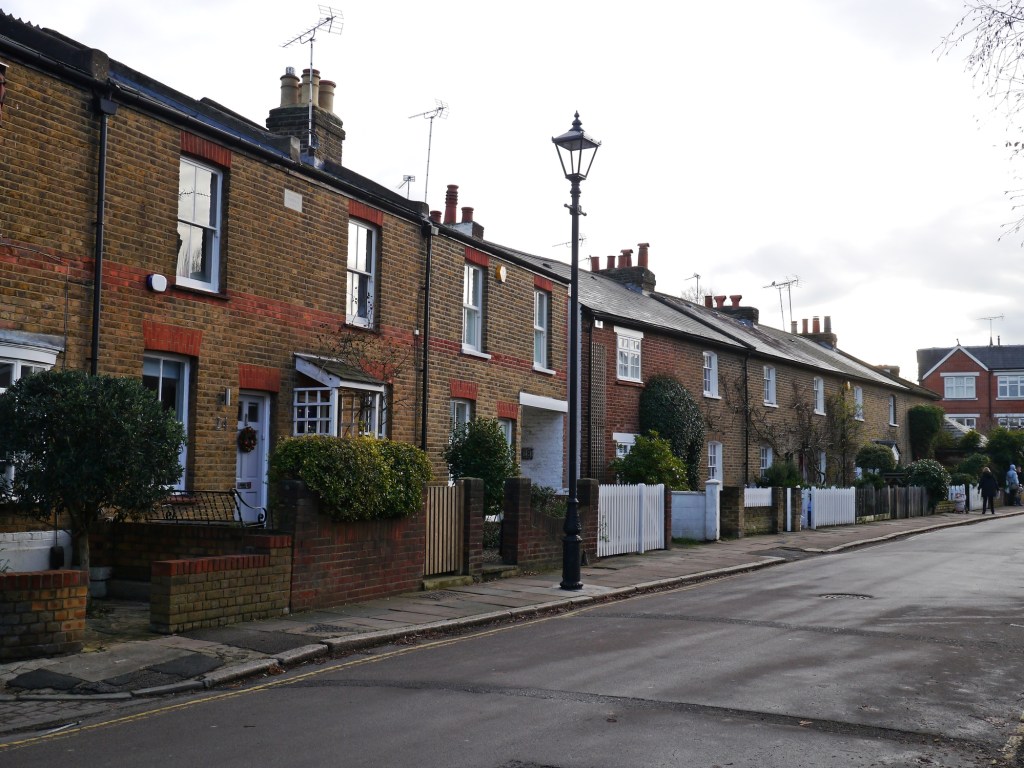
Terraced Victorian Cottages in a London Suburb

Photo Credits:

ID  108841174 © Brenda KeanDreamstime.com

ID  107123717 © Hilsdon25Dreamstime.com

How It Began

The house I grew up in was built in the mid nineteen thirties. We moved into the house in the late nineteen sixties. I loved the house. I felt at home on the very day we moved in, as if it had always been home. Now there was a garden to play in, stairs to climb, an extra room to explore. As the years passed, however, I noticed I was beginning to envy my young friends who lived in ‘modern’ houses. They could look out of their windows unimpeded while I had to peer through diamond leaded panes. They had shiny, silvery door handles inside their homes – we had dark brown doorknobs fashioned from a material I could not identify. (I hadn’t, at that point, learnt the term ‘Bakelite’.) My friends’ homes had lovely plain walls which travelled from the floor to the ceiling without interruption. Strictly speaking, so did ours, but I hated those wooden picture rails which encircled the rooms and made the walls seem shorter. The features my friends’ homes lacked – the very features of our own home which I was viewing with increasing disdain – were classic features of English nineteen thirties houses. “When I grow up, I’m going to live in a modern house” I promised myself.

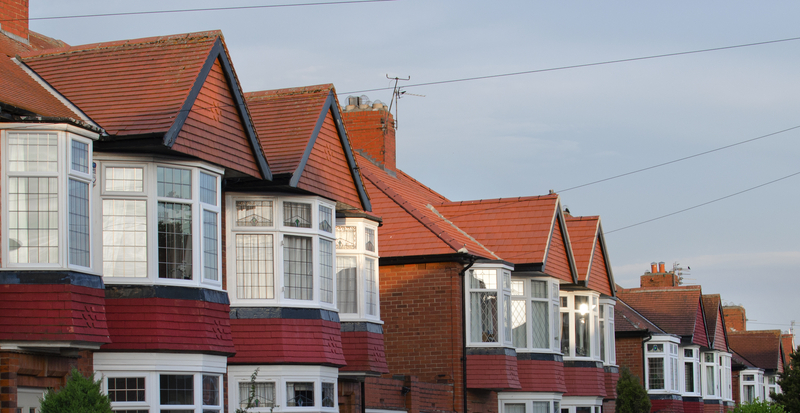
1930s Semi-detached houses

Photo Credit: https://www.dreamstime.com/stock-photo-row-brick-tile-built-semi-detached-houses-s-street-gosforth-newcastle-uk-image55049188