With the view of the Victorian house disappearing into the distance, I headed towards my new home – the ‘new-build’ I’d always dreamed of.
Instead of an estate agent’s, I’d walked into a sales office. Instead of viewing someone’s house, I’d taken a tour of a show home. The day I collected the keys from the site office and walked into that brand new apartment I had a whole new experience. It struck me how much I enjoyed the knowledge that no one else had ever lived there and that the only memories which would be made there would be my family’s. This was a blank canvas for me and my family to design, to decorate and inhabit. It may turn out to be the only ‘new-build’ I will ever buy in my lifetime but I’m glad to have had that experience.
As I walked the rooms, I started thinking about the style or mood of decor I’d opt for. Being a newly built property, it would have to be all sleek and modern, of course. Wouldn’t it?
I have absolutely no idea why it happened, but a very strange feeling come over me as I explored the flat and thought about potential decor styles. “This would look great with design elements from the Thirties, I muttered to myself”.
My childhood wish to live in a modern house didn’t leave me. In fact, as I moved into my teen years, the desire grew even stronger – fuelled, perhaps, by my mother’s love of viewing “show houses”. Sleek designs, open-plan living, bright colour schemes – they served only to reinforce my conviction that a modern home would be the one for me. In fact, not only did I want a modern house, I wanted a newly built house!
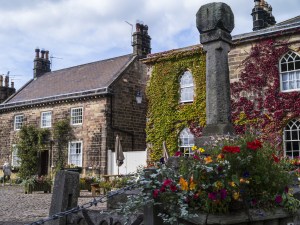
Ripley Village near Harrogate, North Yorkshire, England
During that same time period, though, my parents took me along to see Stately Homes, museums, art galleries and villages which had been built in very particular architectural styles. To give an example; Ripley – a village near Harrogate in Yorkshire, which was modelled on a French village and is quite unlike anything you would expect to see in that county. The village was one of my father’s favourites, and we would visit often. I began to realise that there were facets of historical design which interested me too. My mind was beginning to broaden when it came to the subject of architecture!
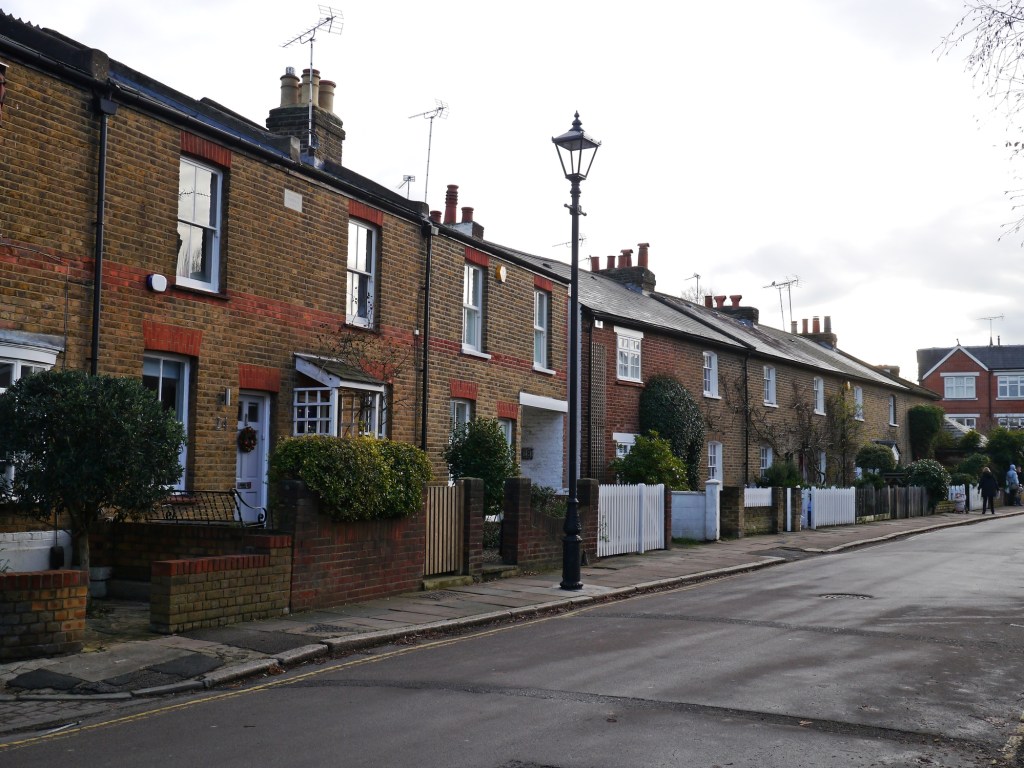
When the time arrived for me to buy my first property there were several pressing practical considerations which over-ruled my desire to acquire a “new-build”. Locality and cost being the two major factors. And so my first ever property acquisition was not new, not even modern but Victorian. I never did find out the exact year in which my house was built. However, datestones on terraced blocks to the right and to the left of my own house stated 1868 and 1888 respectively. So we may conclude that my property was constructed somewhere in the middle of Queen Victoria’s reign.
I would love to be able to relate how I lovingly restored that Victorian workers’ cottage and how I painstakingly renovated original features. I wish I could say my home was worthy of an article in “Period Homes” magazine. That I can claim none of those achievements is a source of ongoing regret.
There were few successful moments in that renovation project which I can look back on with satisfaction. Instead, there were a string of poor decisions and errors. When the house was sold and I turned the key for the last time and drove away, I tried not to look in the rear-view mirror – neither literally nor metaphorically.
I was not aware of it at the time, but those lessons learned were going to stand me in good stead for any renovation and decoration projects I would take on in the future. At that moment, however, all I wanted from my next home was that it would be brand, shiny-new!
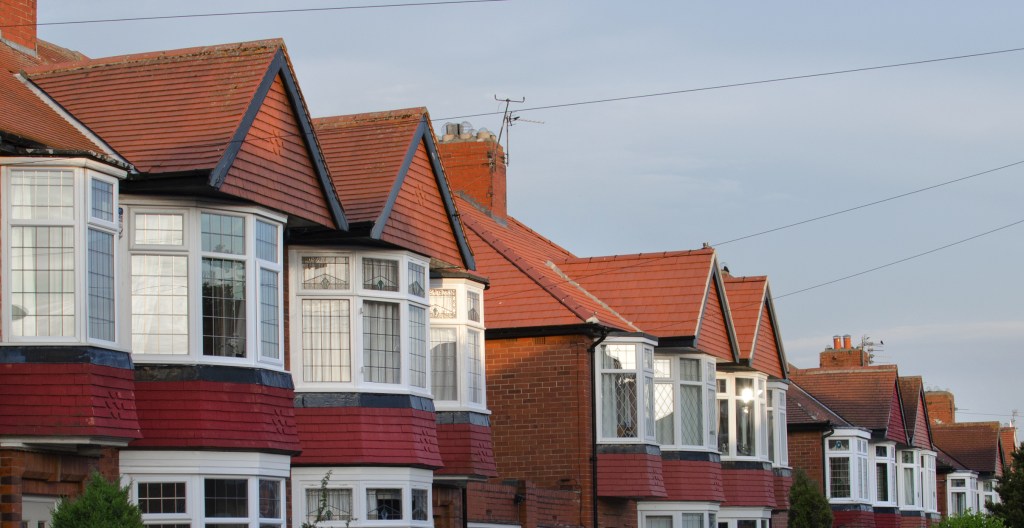
The house I grew up in was built in the mid nineteen thirties. We moved into the house in the late nineteen sixties. I loved the house. I felt at home on the very day we moved in, as if it had always been home. Now there was a garden to play in, stairs to climb, an extra room to explore. As the years passed, however, I noticed I was beginning to envy my young friends who lived in ‘modern’ houses. They could look out of their windows unimpeded while I had to peer through diamond leaded panes. They had shiny, silvery door handles inside their homes – we had dark brown doorknobs fashioned from a material I could not identify. (I hadn’t, at that point, learnt the term ‘Bakelite’.) My friends’ homes had lovely plain walls which travelled from the floor to the ceiling without interruption. Strictly speaking, so did ours, but I hated those wooden picture rails which encircled the rooms and made the walls seem shorter. The features my friends’ homes lacked – the very features of our own home which I was viewing with increasing disdain – were classic features of English nineteen thirties houses. “When I grow up, I’m going to live in a modern house” I promised myself.


 Back to the Thirties