
The day of my appointment was looming. I had made a booking with a Home Stylist from John Lewis’ Home Design Service and I had work to do. I was going to have to convey to my stylist what I saw in my imagination and the look I was aiming to achieve.
I wasn’t knowledgeable on the subject of interior design nor familiar with the specific vocabulary needed to articulate how I wanted my home to look. While these deficiencies did not pose an obstacle to using the design service – I was simply invited to send any photographs or images to provide clues about my preferences – I did notice that a desire to learn more about the subject was being awakened. I wanted to know more about the history and development of design movements.
The internet can be a wonderful resource for research and I began reading a series of online articles – and blogs, of course! I searched for books on these themes and found some very helpful, inexpensive books and set about ordering them. I realised that my understanding of “Art Deco”, “English Country House Style” and the “Arts and Crafts” movement was a little foggy to say the least.
To illustrate, when I had first started to think about the style I would choose for my home I thought the obvious choice would be Art Deco. I’d grown increasingly drawn to elements of this design style over recent years and, given that this movement was at its peak in the nineteen twenties and thirties, it would be perfectly in keeping with the style of my property wouldn’t it? Well, no, not necessarily.
Although my house had been built in the middle nineteen thirties, very few of its features could be associated with Art Deco style. Rather, the property possessed the features of a very specific type of house built in England in the 1930s – the suburban semi-detached. The mock-Tudor elements, the red brick construction, the harking back to design styles from previous eras were, if anything, more in tune with the Arts and Crafts movement of the late nineteenth century. I learnt an important fact – that more than one style of art, design and architecture can exist in one time period.
Two books in particular were very helpful in identifying the differences between what is now termed “Art Deco” architecture and the typical English suburban housing style of the nineteens thirties. Both written by Trevor Yorke, the books “The 1930s House Explained” and “Art Deco House Styles” may be small in size but they are packed with information and illustrations identifying the characteristics of these two design styles.
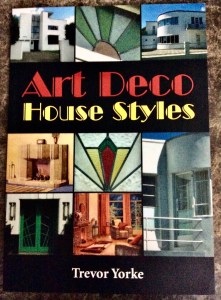
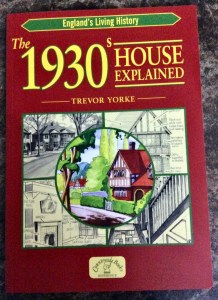
In forthcoming posts, I’ll review the books and highlight points which have proved, in my own case, to be helpful.
( For further information about these books, visit: http://www.countrysidebooks.co.uk )
 Back to the Thirties